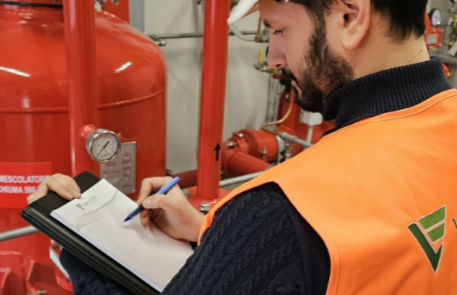
Fire safety is a critical concern across industries, commercial buildings, and residential complexes. Traditional fire risk assessments provide a basic understanding of potential hazards, but modern challenges demand more sophisticated approaches. Advanced techniques in fire risk assessment help organizations not only identify risks but also predict potential outcomes, optimize safety measures, and enhance emergency preparedness.
Understanding Fire Risk Assessment
Fire risk assessment is the systematic process of identifying fire hazards, evaluating the risk of occurrence, and implementing preventive and protective measures. While conventional methods often rely on checklists and basic inspections, advanced techniques incorporate scientific analysis, data modeling, and technology-driven solutions to provide a more accurate and proactive approach to fire safety.
Key Advanced Techniques in Fire Risk Assessment
1. Computational Fire Modeling
Computational fire modeling involves simulating fire scenarios using software to predict the behavior of fire in various environments. These models take into account factors like material combustibility, ventilation, building layout, and human behavior. By simulating different fire conditions, organizations can identify high-risk areas, optimize evacuation routes, and design effective fire suppression systems.
Benefits:
- Predicts fire spread and intensity.
- Improves safety design for complex structures.
- Enhances emergency response planning.
2. Smoke and Heat Detection Technology
Modern fire risk assessments utilize advanced sensors and detection systems. Smoke detectors, heat sensors, and combined multi-criteria detectors provide early warning by analyzing multiple fire indicators simultaneously. Integration with IoT (Internet of Things) allows real-time monitoring and rapid response.
Benefits:
- Real-time detection and alerts.
- Reduces false alarms.
- Supports predictive maintenance of fire safety equipment.
3. Risk Quantification and Probabilistic Analysis
Unlike traditional qualitative assessments, advanced techniques apply quantitative methods to measure fire risks numerically. Probabilistic risk assessment (PRA) evaluates the likelihood of fire occurrence and its potential consequences. This allows safety managers to prioritize risks based on statistical data rather than subjective judgment.
Read Also: Dusk to Dawn Outdoor Lights for Security Energy Savings and Easy Convenience
Benefits:
- Prioritizes high-risk areas efficiently.
- Supports cost-effective risk mitigation.
- Provides data-driven insights for insurance and compliance purposes.
4. Thermal Imaging and Infrared Scanning
Thermal imaging cameras and infrared scanners detect abnormal heat patterns in electrical panels, machinery, and structural components. Identifying hotspots before a fire occurs is crucial in preventing incidents, especially in industrial facilities.
Benefits:
- Detects hidden fire hazards.
- Prevents fire outbreaks in high-risk areas.
- Reduces downtime and maintenance costs.
5. Human Behavior and Evacuation Simulation
Understanding human response during a fire is a crucial part of risk assessment. Advanced simulation software models evacuation scenarios, considering factors like population density, mobility limitations, and exit accessibility. This helps refine evacuation plans and improve safety training.
Benefits:
- Optimizes evacuation routes.
- Reduces panic and congestion during emergencies.
- Enhances training programs for employees and residents.
6. Integration of Building Information Modeling (BIM)
Building Information Modeling (BIM) technology allows fire risk assessors to visualize fire hazards in a 3D digital model of the building. BIM integrates architectural, structural, and mechanical data, enabling accurate identification of fire risks and planning for fire suppression systems.
Benefits:
- Provides a comprehensive view of fire hazards.
- Facilitates collaboration among safety engineers, architects, and emergency responders.
- Enhances long-term building safety management.
7. Artificial Intelligence and Machine Learning
AI and machine learning algorithms analyze historical fire data, sensor readings, and environmental conditions to predict potential fire risks. These intelligent systems can continuously learn and adapt, offering dynamic fire risk assessments that improve over time.
Benefits:
- Predicts high-risk periods or conditions.
- Optimizes fire safety resource allocation.
- Supports continuous monitoring and improvement of fire prevention strategies.
Implementation Best Practices
To leverage advanced techniques effectively, organizations should:
- Conduct comprehensive building audits using advanced modeling and sensor data.
- Integrate multiple data sources, including historical fire incidents, environmental data, and maintenance records.
- Regularly update risk assessments to account for structural changes or operational modifications.
- Train personnel in using advanced fire detection systems and emergency simulation tools.
- Collaborate with experts in fire safety engineering to validate models and strategies.
Conclusion
Advanced techniques in fire risk assessment represent the future of fire safety management. By integrating computational modeling, AI-driven analysis, advanced detection systems, and human behavior simulations, organizations can anticipate hazards, prevent fire incidents, and protect lives and assets. Adopting these sophisticated methods ensures a proactive and data-driven approach to fire safety, moving beyond traditional reactive measures.
FAQs
Q1: What is the difference between traditional and advanced fire risk assessment?
Traditional assessments rely on visual inspections and checklists, while advanced techniques use data modeling, sensors, simulations, and AI to predict fire risks and optimize safety measures.
Q2: How does AI help in fire risk assessment?
AI analyzes historical and real-time data to identify patterns, predict high-risk scenarios, and recommend preventive measures, making risk assessments dynamic and adaptive.
Q3: Is computational fire modeling suitable for all types of buildings?
Yes, but it is particularly useful for complex structures like high-rise buildings, industrial plants, and facilities with high occupancy, where fire behavior is harder to predict.
Q4: Can these advanced techniques reduce fire insurance costs?
Yes, insurers often consider organizations with sophisticated fire risk management systems as lower risk, which can lead to reduced premiums.
Q5: How often should fire risk assessments be updated?
Fire risk assessments should be updated regularly, especially after structural changes, operational modifications, or significant technological upgrades to fire safety systems.