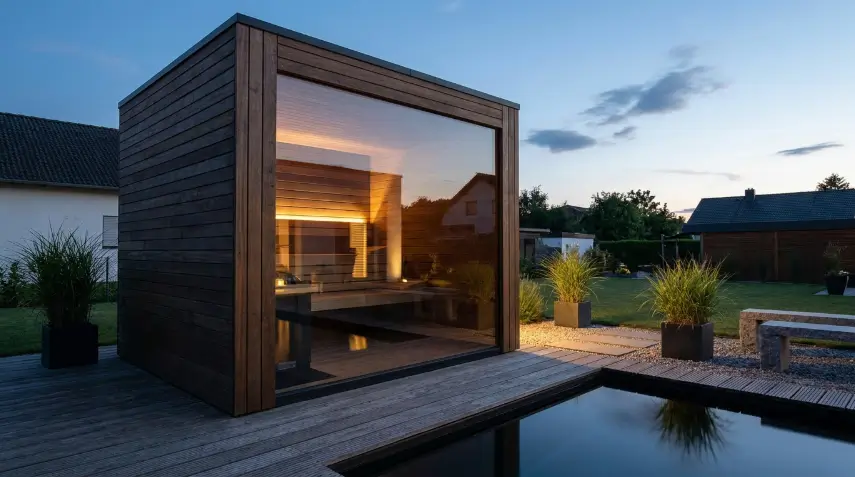
Running a 2-person cube sauna through a cold winter typically adds 15 to 30 percent to per-session electricity cost compared to running it in mild weather, because the heater is fighting a larger gap between outdoor and target temperature. On a standard residential electricity rate, a single 45-minute session with a 6kW heater in freezing conditions usually falls somewhere between 60 cents and $1.50, depending on local utility rates and how insulated the cabin is. For a household using the sauna three times a week all winter, that adds up to a real but manageable line item, not a hidden expense that changes the math on ownership.
How Much Does Cold Weather Actually Add to the Heating Bill?
A sauna heater’s job is to move the interior air from ambient temperature up to roughly 170 to 190 degrees Fahrenheit and hold it there. In summer, that might mean climbing 100 degrees; in a freezing winter climate, the same heater is climbing 140 to 150 degrees, which takes more sustained energy draw and a longer warm-up period. For a 6kW heater running at full draw during warm-up, the difference between a 30-minute and a 40-minute heat-up cycle translates to roughly an extra kilowatt-hour or two per session, which at typical US residential rates adds well under two dollars per use.
What Insulation Details Actually Matter in Cold Climates?
Flat-panel cube sauna walls typically use tongue-and-groove Nordic spruce or thermally modified wood over an insulated core, and the quality of that core insulation has a bigger effect on winter heating cost than any other single factor. A well-sealed door gasket and a tight-fitting glass door matter just as much, since heat loss around door seals is one of the most common places a cabin bleeds warmth in cold weather. Buyers in genuinely cold climates should confirm the insulation rating and door seal quality before ordering rather than assuming all cube models perform the same in a Minnesota winter as they would in Georgia.
What Does a Realistic Winter Session Cost Look Like Month to Month?
Assume three 45-minute sessions a week through a cold winter month, each drawing roughly 4 to 5 kilowatt-hours once warm-up and hold time are combined. At a national average residential rate near 16 cents per kilowatt-hour, that works out to roughly $8 to $10 a month in electricity, more in regions with higher utility rates or a heater running longer to fight harsher cold. That is a modest ongoing cost relative to the upfront purchase and install, and it is worth comparing against gym membership or spa visit costs when weighing whether a home unit pays for itself over a winter season.
What Outdoor Maintenance Does Winter Add?
A pent roof sheds snow on its own most of the time, but snow that piles up against the base of the exterior walls can hold moisture against the wood siding longer than is good for the finish. Clearing a path to the door and brushing snow off the roof and lower walls after a heavy storm takes a few minutes and protects the exterior over a full season. Because a cube sauna has no plumbing, there is no water line to winterize, which keeps the cold-weather maintenance list shorter than it would be for a hot tub or an outdoor kitchen.
Is a Cube Sauna Worth the Winter Running Cost?
Given that regular sauna bathing carries a documented association with favorable cardiovascular outcomes in long-term research, and given that winter electricity costs for a well-insulated 2-person cube sauna typically run under $10 to $15 a month with regular use, the ongoing cost is modest relative to what a household gets from consistent access. Shoppers weighing a winter-ready unit against a less insulated option can compare build specs directly at sweatdecks.com before deciding which model handles a cold climate best.
What Should a Cold-Climate Buyer Ask Before Ordering?
Ask about the insulation R-value or thickness used in the wall panels, the door seal design, and whether the heater is sized generously enough for the local climate rather than just the cabin’s square footage. A heater sized for a mild climate can end up underpowered once temperatures regularly drop below freezing, leading to longer warm-up times and higher per-session cost. Getting the heater sizing right at purchase avoids paying for inefficiency every winter afterward.
Does a Cube Sauna Need a Different Heater for a Genuinely Cold Climate?
Manufacturers typically size heaters to a cabin’s interior volume assuming a moderate climate baseline, so a buyer in a region that regularly sees single-digit or sub-zero winter temperatures should ask specifically whether the standard heater size is adequate or whether an upgraded model is recommended. An undersized heater in a genuinely cold climate can still reach temperature, just more slowly, and may struggle to hold a stable temperature on the coldest days if the door is opened frequently. Some manufacturers offer a slightly larger heater option for the same cabin size specifically for buyers in colder regions, which adds modestly to the upfront cost but avoids a heater running at its maximum output on every single winter session just to keep up.
Frequently Asked Questions
Does a cube sauna cost more to run in winter than summer?
Yes, the heater works harder against a wider temperature gap when outdoor temperatures drop below freezing, which can add 15 to 30 percent to per-session electricity draw compared to a mild fall day. The increase depends on wind exposure, insulation quality, and how cold it actually gets.
How long does a cube sauna take to heat up in freezing weather?
A well-insulated 2-person cube sauna with a properly sized heater typically still reaches operating temperature in 30 to 45 minutes even in cold weather, though a cabin that has sat unused and fully cold-soaked for days may take a bit longer on the first cycle.
Does snow or ice damage a cube sauna’s exterior?
A pent roof sheds snow reasonably well on its own, but accumulated snow left against the base of the walls can hold moisture against the wood siding. Clearing snow away from the perimeter periodically protects the exterior finish over a full winter season.
Should the water lines or plumbing be winterized?
A standard cube sauna has no plumbing to freeze, since it runs on electric heat rather than water. If a nearby outdoor shower or hose bib is part of the setup, that separate fixture should be winterized following typical cold-climate plumbing steps.
References
- Cardiovascular and Other Health Benefits of Sauna Bathing: A Review of the Evidence, Mayo Clinic Proceedings, 2018.
- Does the Combination of Finnish Sauna Bathing and Other Lifestyle Factors Confer Additional Health Benefits? A Review of the Evidence, Mayo Clinic Proceedings, 2023.
- Effects of heat and cold on health, with special reference to Finnish sauna bathing, American Journal of Physiology – Regulatory, Integrative and Comparative Physiology, 2018.
By Megan Sorensen